



Getting Started
For remodels and renovations, Kirkwood Stair starts with a quick phone consult, then an email thread exchanging site photos or plans. Next there is a discussion of schedule, budget, code compliance, materials and design goals. For new construction, especially with multiple stairs, it’s best to book an appointment with a senior rep at the Kirkwood Home Gallery to review all of the plans in detail before getting into any physical work. This whole process of design through installation is usually 8–16 weeks. The on-site installation specifically can be somewhere between 5 days to 3 weeks, with the longer end being for complex glass and metal.
There are definitely some things to know as a homeowner before getting into this process, Chris says. “It is always best to involve us early on complex configurations so design, code and engineering stay aligned,” he emphasizes. Plenty of lead time should be considered due to the fact that great stairs are fully engineered products, not just decor or trim. Additionally, code and safety come first with Kirkwood Stair. This includes things like risers and treads, rail height and having a graspable handrail. In terms of functional appearance, it's important to consider acoustics and privacy, expected maintenance and wood stain and color samples under the actual lighting of the home.
Ample Options
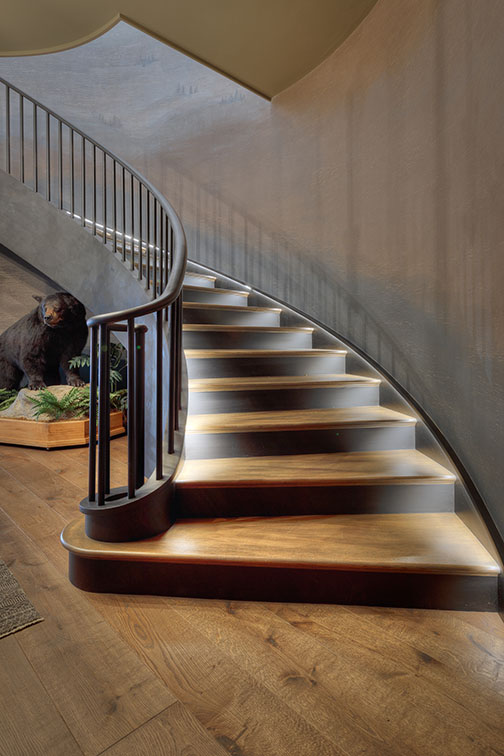
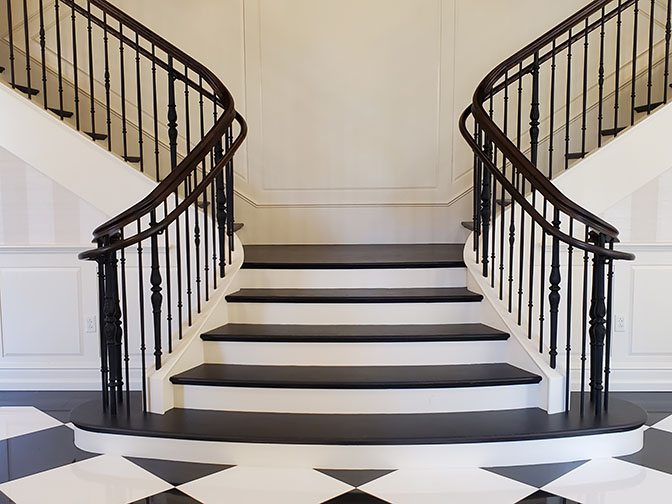
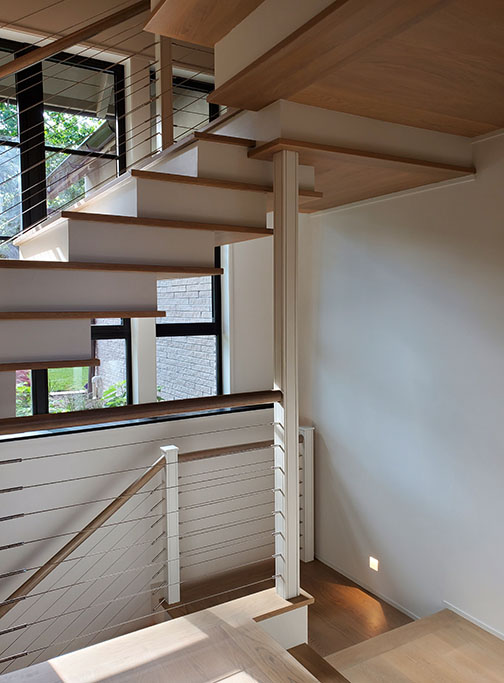
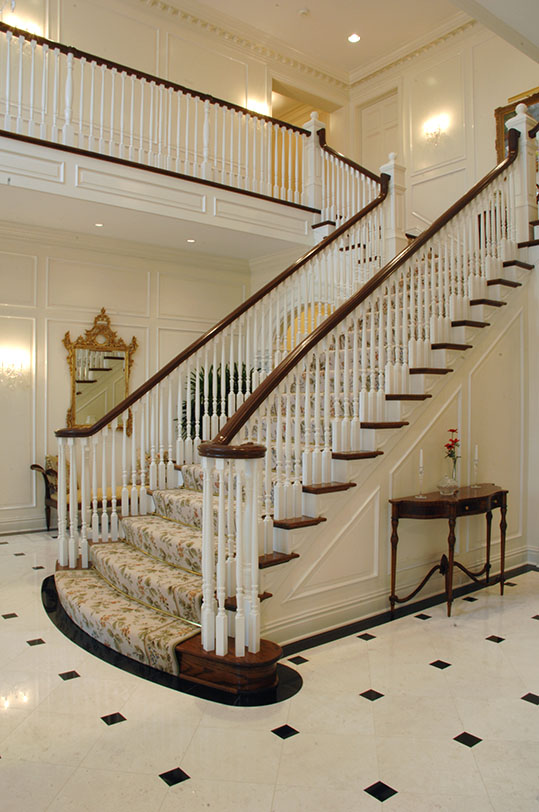
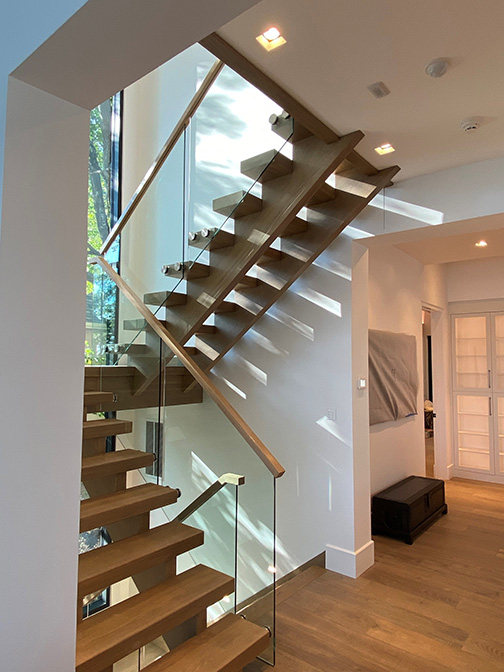
Kirkwood Stair creates all types of stair designs from straight, L-turn, U-turn/switchback, curved, helical, mono-stringer “floating,” open or closed risers and wood/steel/glass combinations. Each of these choices require a unique process of engineering to the chosen space and meet strict builder code. Most traditional styles favor simple square balusters, standard treads, closed stringers and detailed newels, while contemporary leans toward clean profiles, thicker treads, open risers and glass. Additionally, a well-proportioned closed-riser oak stair with a clean railing design works in almost any home.
While being a showtopping statement to a modern home, freestanding helical or stacked spirals with minimal visible structure and continuous curved rail tends to be the most difficult style to engineer. Things like the geometry, concealed structural steel, glass alignment and finish matching leave no room for error. These tolerances are measured in millimeters rather than the typical inches, but the railing is typically where craftsmanship really shows. Any homeowner deserves to have the grand staircase of their dreams, but safety and code must always come first, according to Chris.
New Home vs. Renovation
New builds allow for coordinating framing, blocking and openings early so structure is baked in from the very start. Alternatively, renovations add demolition, temporary access, dust control, protection and creative structural load paths inside existing walls. It comes out with the same end result, just with tighter choreography existing elements and spaces must be worked around. It’s important to consider how challenging it can be for clients to live in a home while renovating stair and rail systems, namely how upper floors may be inaccessible for short periods of time.
Project Highlight
We prefabricated a seven-level, curved European white-oak stair system with matching wall rails and paneling in our Pacific, MO facility, shipped and installed in Manhattan, NYC. It was a true collaboration with world-class architects and contractors delivered on tight timelines, with concealed structure and millimeter-true handrail continuity from shop to site.
