

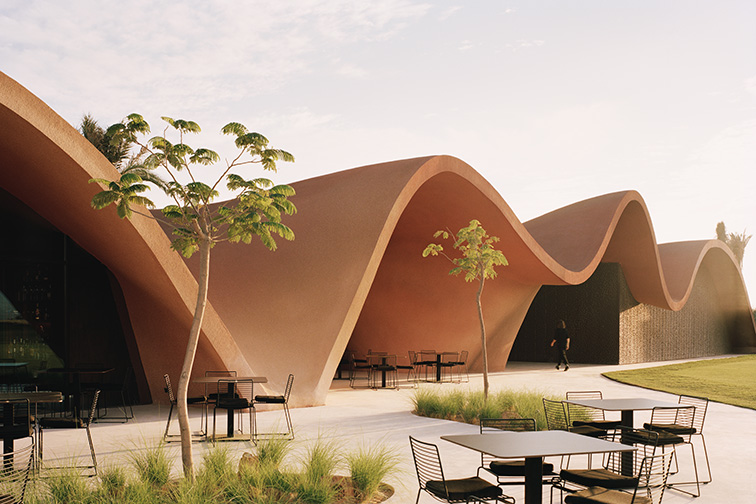
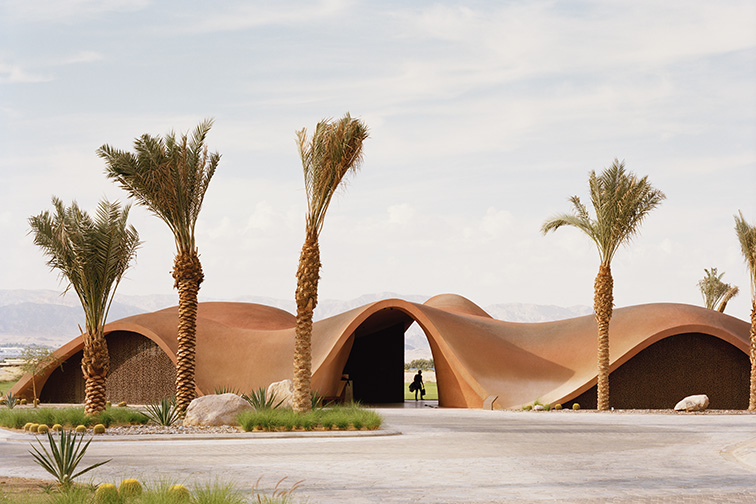


Located in Jordan’s port city of Aqaba, the Ayla Golf Clubhouse is surrounded by rich, scenic landscapes, inspiring the organic design of the clubhouse with gentle waves rippling throughout. From the Red Sea to the mountains and deserts in the background, Ayla’s Golf Clubhouse is a part of a multi-feature resort, a major site of tourism for Aqaba. Spanning over 800,000 square meters, this golf course is home to Jordan’s first ever 18-hole championship golf course, as well as a 9-hole golf academy. Whether a beginner or a professional, all are welcome at Ayla Golf Clubhouse, designed by athlete and entrepreneur Greg Norman.
While designing the course, Greg Norman sought to have as few disturbances as possible, striving to highlight the course’s natural features and environment. The architecture, done by Oppenheim Architecture, endeavored to do the same, to make this course as environmentally and socially conscious as possible. This also extended to the technology and people who helped to build the golf course, as the construction was only made possible through an exchange of knowledge between Oppenheim Architecture and the skill of the local Aqaba people. To create the iconic waves of the clubhouse, Oppenheim’s team collaborated with two shotcrete experts to teach the local Aqaba builders shotcrete pouring techniques, giving them not only the specialized skills needed, but also ownership of the construction of the clubhouse. Additionally, the clubhouse’s design pays homage to the ancient architecture of the Bedouin people.
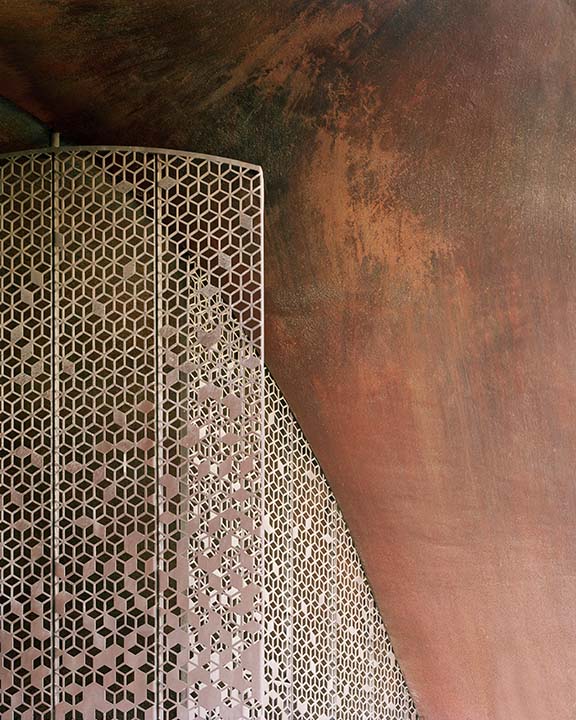
What makes the Ayla Golf Clubhouse even more special is its commitment to creating a more eco-friendly and sustainable golf course. With its sleek curves and earthy tones, the Ayla Golf Clubhouse incorporates Jordanian elements in both design and materials, with local minerals and traditional pigments used in the clubhouse’s construction. The concrete roof of the golf course is reminiscent of gentle waves found in Aqaba’s deserts, while the perforated steel screens of the clubhouse have cut outs similar to traditional Arabic mashrabiya. These cut outs allow not only natural sunlight to pour in, but help gentle coastal breezes flow in as well.
Furthermore the site includes numerous man-made lakes that act as both reservoirs and resting points for migrating birds that pass through. Besides the usage of a concrete pump, no other machinery was used, and everything was done by hand. As a result, one of the most eco-friendly golf courses in the world was born.
See more at https://oppenoffice.com/works/ayla-golf-clubhouse/
